Byzantium 1200: Istanbul in the year 1200
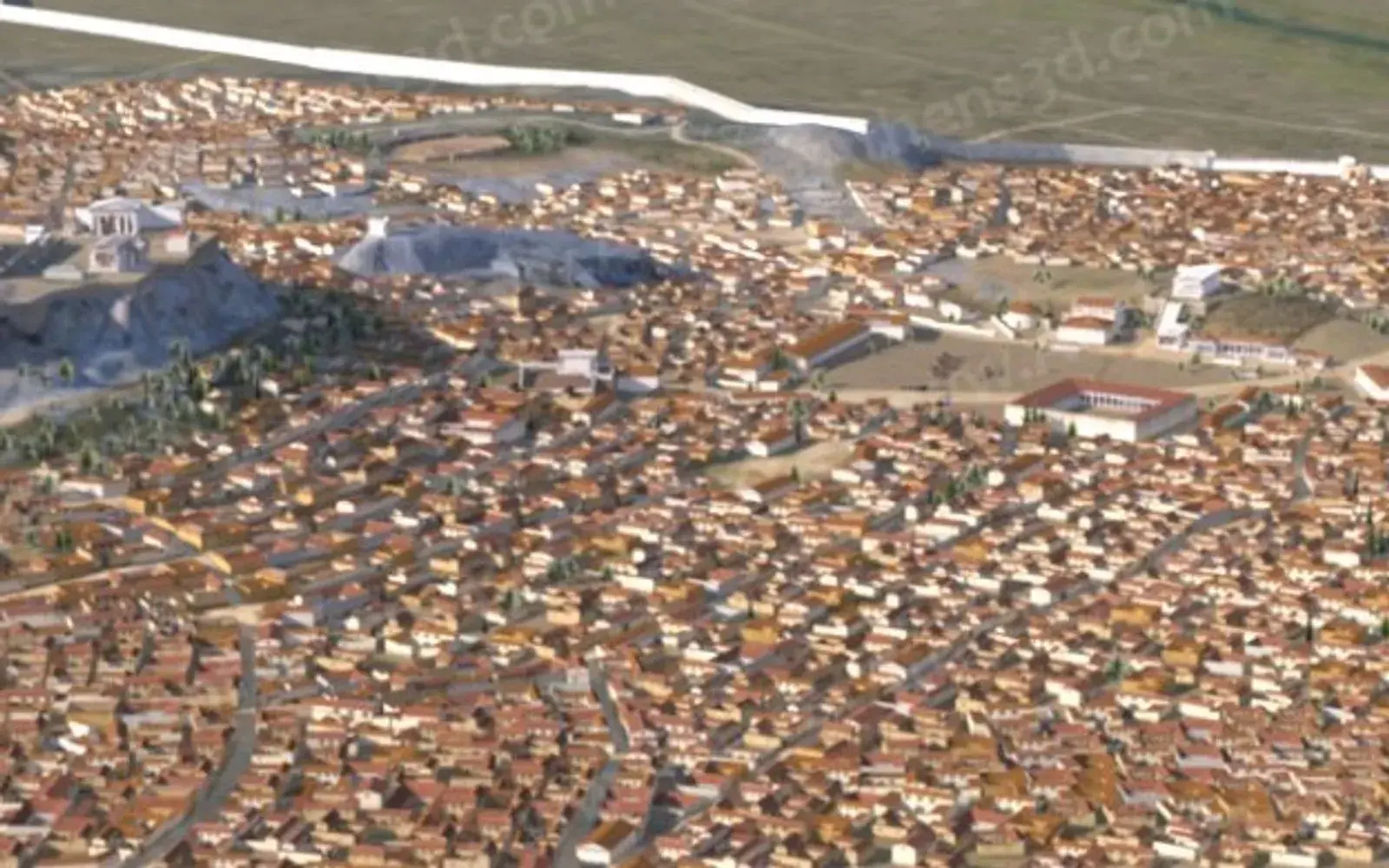
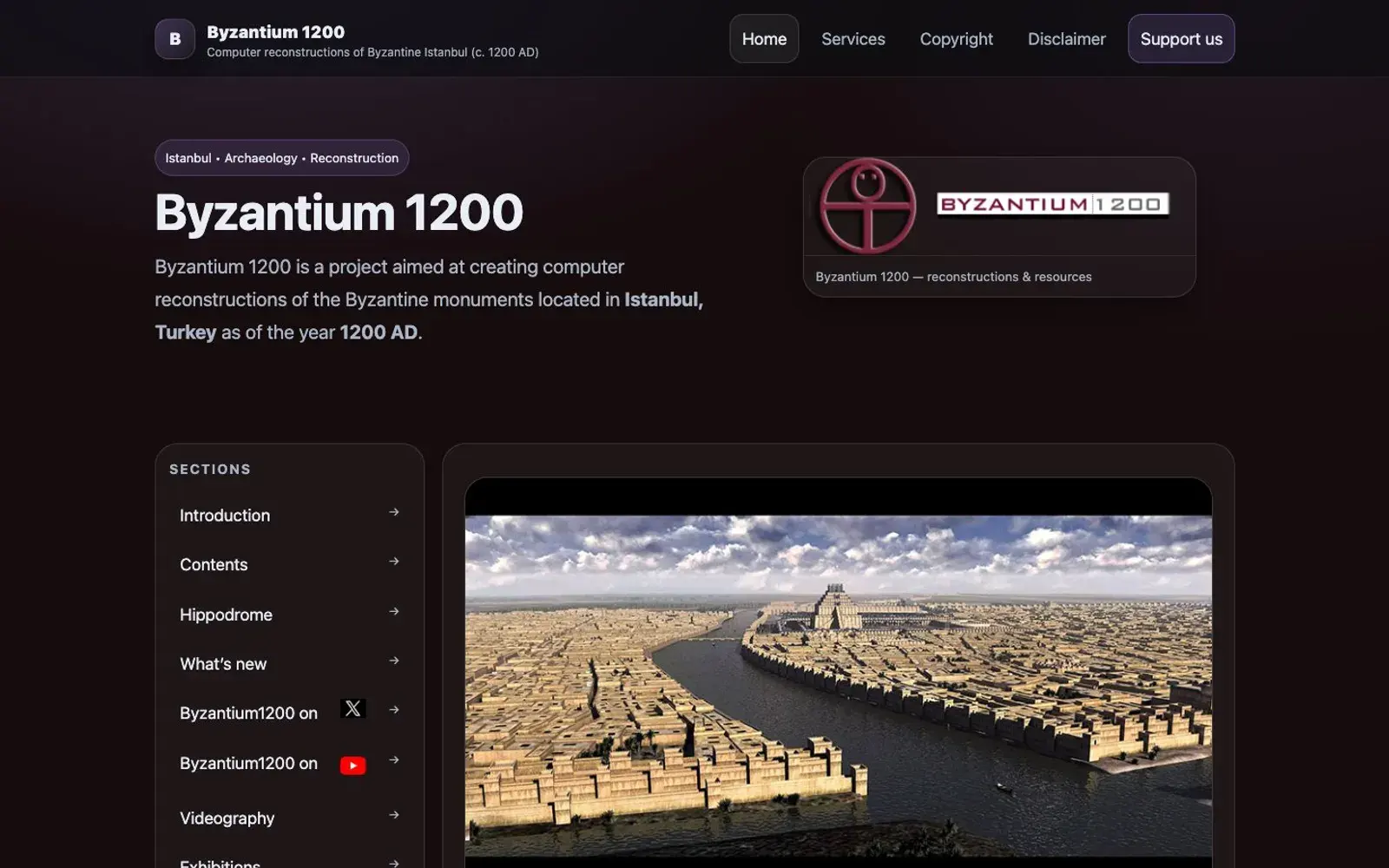
Byzantium 1200 rebuilds Byzantine Constantinople in 3D: Hagia Sophia, the Great Palace, the Hippodrome with every known statue, and the city walls.
What it is
Byzantium 1200 is an unfunded project that builds computer reconstructions of Istanbul's Byzantine monuments as they may have looked around 1200 AD. Its creator says the idea came from the model of ancient Rome and Alan Sorrell's painting of medieval Constantinople; in 1994 the work began in consultation with Byzantine scholars, including historian Albrecht Berger, drawing on sources at the German Archaeological Institute. The site is in English.
Why we picked it
In Istanbul the Byzantine city is literally underfoot — cisterns, stretches of wall, palace foundations under Sultanahmet hotels. Picturing the whole city is almost impossible. Here it has been put back together: the city is divided into map tiles, and every one is finished. The index lists dozens of sites — Hagia Sophia and Hagia Eirene, the Great Palace and the Boukoleon, the Chora Monastery, the Aqueduct of Valens, the Theodosian Walls, the forums of Constantine and Theodosius, the cisterns.
The Hippodrome is the highlight. It was reconstructed in 2008–2010 with historian Jonathan Bardill for an exhibition at Istanbul's Pera Museum, and the page lists every known statue that stood there, from Herakles and the Nemean lion to a hippopotamus and winged sphinxes. You can download the model for Google Earth.
We also liked the honesty. The homepage carries a notice that real Constantinople never looked this good: after fires, earthquakes and the Fourth Crusade, much of it lay in ruins.
Where to start
- Open Contents and pick a monument you know, such as Hagia Sophia.
- Look at the tile map on the homepage to see the whole city at once.
- Visit the Hippodrome page and its catalogue of statues.
- Read the Introduction for the story behind the project.
- Compare the reconstructed walls with what stands in Istanbul today.
Who it's for
Anyone who has been to Istanbul or is planning to go. History and Byzantine art fans. Teachers who need clear visuals for a lesson.
Quick answers
Is it still updated? The main model is complete; the site has a modern mobile-friendly layout, and news goes out on X.
How accurate is it? The work was done with historians, but the author stresses it shows an idealised city.
Do I need to install anything? No. It all works in a browser; the Google Earth KMZ file is optional.