Standard Ebooks: classics, properly typeset
A volunteer project that turns public-domain books into carefully made ebooks: proofread against original scans, with real typography and new covers. Free, and free of restrictions.
What it is
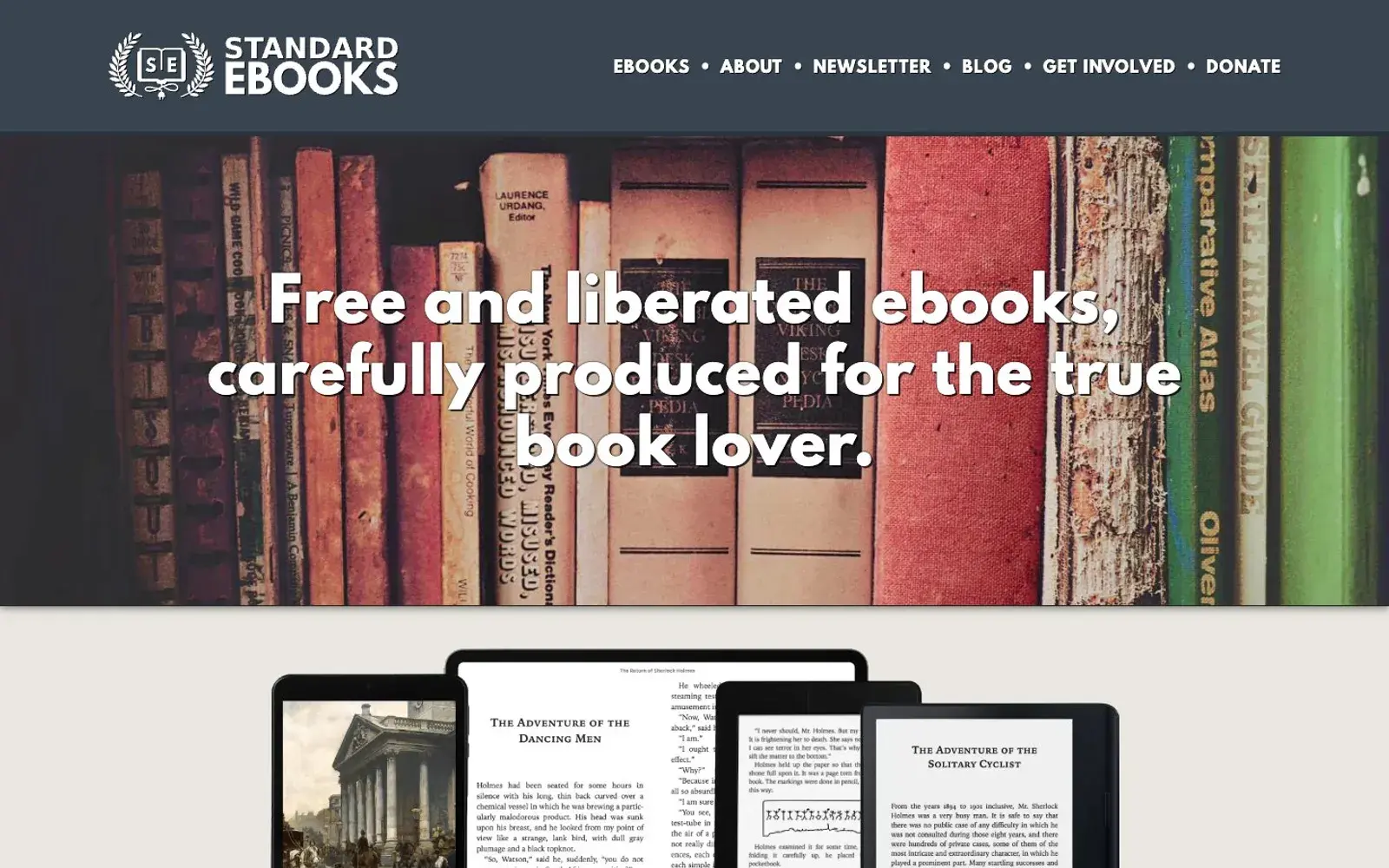
Standard Ebooks is a volunteer project that produces high-quality ebook editions of public-domain books. It starts from open sources like Project Gutenberg and then does the finishing work: proofreading against scans of the original editions, fixing quotation marks and dashes, adding hyphenation, popup footnotes, a proper table of contents, and covers made from public-domain fine art.
Why we picked it
Free classics are easy to find. Free classics that are pleasant to read are not. A typical file from an open archive comes with broken paragraphs, straight quotes and scanning typos. Every book here looks like an editor and a typesetter actually sat with it, and you notice from the first page. The project has its own detailed style manual, and all corrections are tracked in Git, so the process is out in the open.
It's also very much alive: the new releases feed shows books published in the last few days. And everything is dedicated to the public domain under CC0, so both the books and the work that went into them are free with no strings attached.
Where to start
- Open the catalog and sort by newest to see what came out this week.
- Look up a book you've always meant to read: Austen, Dickens, Conan Doyle.
- Download it in the format your reader wants; there are Kindle, Kobo and standard EPUB options.
- Browse the covers; matching paintings to books is a small pleasure of its own.
- If you'd like to help, check the section on volunteering.
Who it's for
Anyone who loves classic literature, e-reader owners tired of messy free files, English learners reading through literature, and typography fans who care about curly quotes.
Quick answers
Is it free and legal? Yes. The books are in the public domain, and the project's own work is dedicated to the public domain under CC0.
How is it different from Project Gutenberg? The texts are proofread against original scans and produced to a single style, with proper typography, footnotes and covers.
Who makes the books? Volunteers, working to the project's style manual.