Ancient Athens 3D
A long-running hobby project rebuilding Athens in 3D, era by era — from the Mycenaean period to 1833: the Acropolis, the Agora, Kerameikos and Roman Athens.
What it is
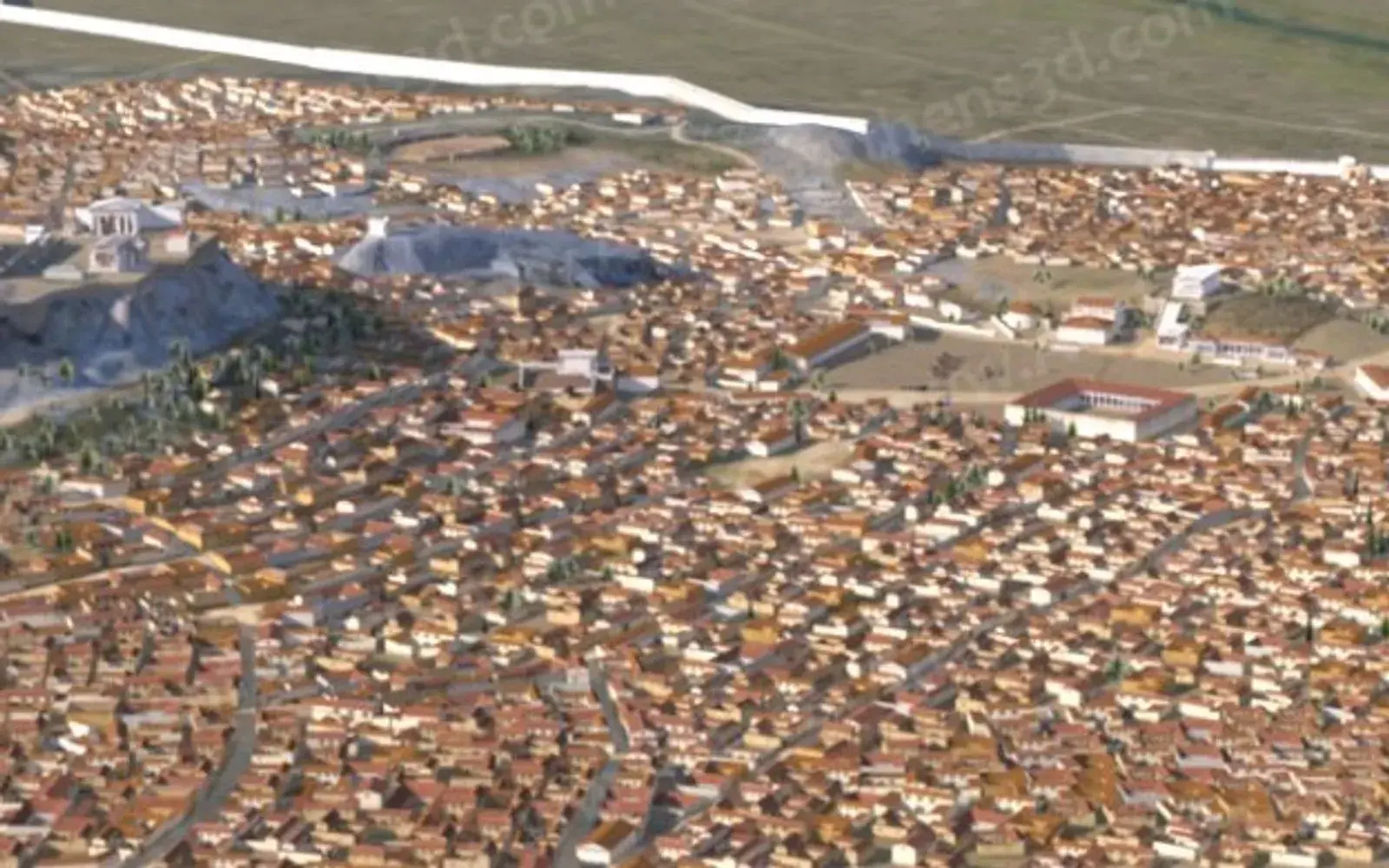
Ancient Athens 3D is a website of 3D reconstructions of Athenian monuments and buildings. It describes itself as a personal project created as a hobby, started in 2008 and still being updated. The creator isn't named on the homepage, but the amount of work behind it is obvious.
The site is organised by period: Mycenaean, Archaic (600–480 BC), Classical (479–323 BC), Hellenistic, Roman (86 BC – AD 267), Medieval (267–1458) and Ottoman (1458–1833). Inside each period you'll find dedicated pages — the Archaic, Classical, Hellenistic, Roman and Medieval Acropolis, the Agora through the centuries, the south slope of the Acropolis, Kerameikos and the city walls, the Roman Agora, Hadrian's Library, the Olympieion and Hadrian's Arch. Each period also has its own history page. On top of that there's a multimedia section, a building index and an Athens timeline. Everything is in English, with a Greek version available.
Why we picked it
Standing on the Acropolis, you see ruins and crowds — picturing the living city is hard. Ancient Athens 3D does exactly that: it shows the same spot across different centuries. You can compare the Archaic Acropolis with the Classical one, watch the Romans fill in the Agora, then see what was left of it in late antiquity. It's not a postcard; it's a city changing in front of you.
We also like that it doesn't stop at the Golden Age. Medieval and Ottoman Athens get their own sections, and those are periods most popular accounts of Greece skip entirely. If you prefer video, there are short films, including one on the Stoa of Attalos and a tour of Classical Athens. The links and publications pages show what sources the reconstructions lean on.
Where to start
- Open "The Classical Acropolis" — the most familiar view and the easiest anchor.
- Compare it with "Archaic Acropolis" and "The roman Acropolis" to see how the hill changed.
- Watch "A tour in Classical Athens" in the multimedia section.
- Use the Athens Timeline to put the periods in order.
- Heading to Athens? Look up the places on your route in the building index.
Who it's for
Travellers who want the ruins to make sense, history and art teachers, archaeology students, and anyone who enjoys architectural reconstructions. The text is short and readable, and the images carry most of the story. It's also a handy visual reference for illustrators, writers and game designers working with the ancient world.
Quick answers
Who makes it? The site calls itself a personal hobby project started in 2008; the author isn't named on the homepage.
What languages is it in? English, with a Greek version.
Can I reuse the images? The site's terms explicitly forbid using its material to create AI-generated content; check the terms page for anything else.