Stanislav Naranovich on antiquity
A Russian classicist's channel on ancient philosophy and classical philology: the Cynics, Plato, Greek syntax, text databases and what reading ancient authors really takes.
What it is
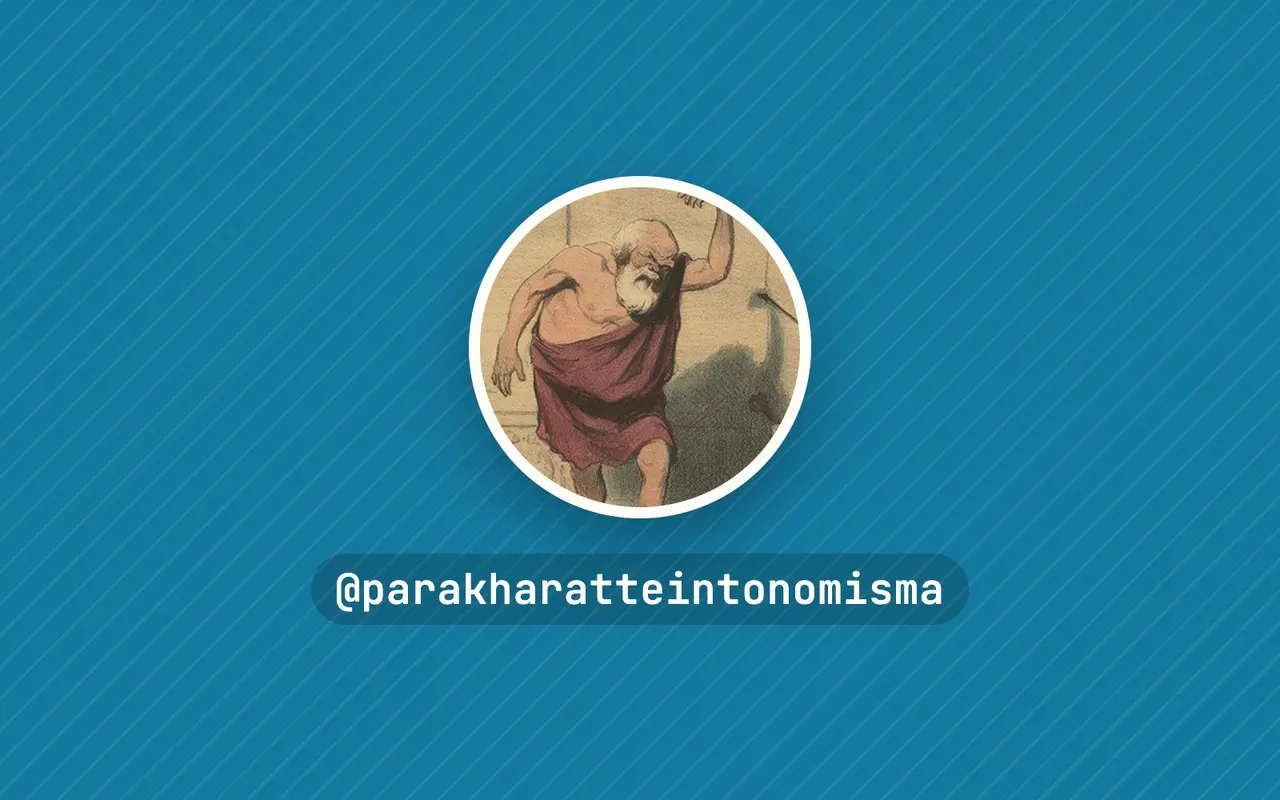
This channel goes by a Greek name, "παραχαράττειν τὸ νόμισμα" — "deface the currency", the motto associated with Diogenes and the Cynics — and is run by Russian classicist Stanislav Naranovich. Its description is plain: a channel about ancient philosophy and classical philology. When we checked it had about 8,500 subscribers and had posted in early October. Posts are in Russian, with frequent Greek quotations.
The feed mixes short research notes, the author's working observations, announcements of lectures and courses, and practical links for people who read ancient authors in the original.
Why we picked it
It offers a rare view of antiquity from inside the profession. Naranovich doesn't retell myths or collect "fun facts about ancient Greece"; he shows what a classicist's work looks like. He recently wrapped up three years of research on spiritual exercises among the Cynics: a draft of around 140,000 characters, four conference papers, all written alongside a master's thesis. He titled the post "A Dog's Life" — a joke and a precise nod to the Cynics themselves, whose name comes from the Greek for "dog".
Some posts are immediately useful. He points to an online version of the older TLG database — a major corpus of Greek texts — with an advanced search interface, along with a similar project by French colleagues. For anyone learning Ancient Greek, such links save hours.
We enjoyed his survey on independent reading, too. He asked people who read Greek or Latin how much time they spend on it; 274 replied, and he published the breakdown, from three to four hours a day down to "once every few days". It is a surprisingly candid picture of life with dead languages.
There is also a series called "Problems of Greek Syntax", which opens with an 1899 speech by the president of the University of California complaining about too much attention to syntax in Greek and Latin classes. A century-old argument that still sounds current.
Where to start
- Read "A Dog's Life" — it explains both the author's research and the channel's name.
- Look at the results of the reading-time survey.
- Bookmark the searchable TLG link if you study Greek.
- Dip into the "Problems of Greek Syntax" series.
- If you want to study yourself, watch for announcements of evening courses in Ancient Greek and Latin and lectures on Plato.
Who it's for
Russian-speaking classics and philosophy students who want to see the field up close. People who once started Latin or Greek and want to get back into it. Fans of Plato, the Stoics and the Cynics who have outgrown popular books. The bar is higher than in a typical pop-science channel, with Greek and specialist terms, but the writing is clear enough to follow even without the languages — and a translator will handle the Russian.
Quick answers
Who runs it? Stanislav Naranovich, whose name and contact are listed in the channel description.
Do I need Ancient Greek? No — most posts are in Russian, though Greek words and quotes appear often.
Are there courses? The channel announces language courses and lectures, but most of it is notes and links.