Shrift type magazine
A Russian online magazine about type, typography and Cyrillic: history, interviews with designers worldwide, and yearly roundups of new Cyrillic typefaces.
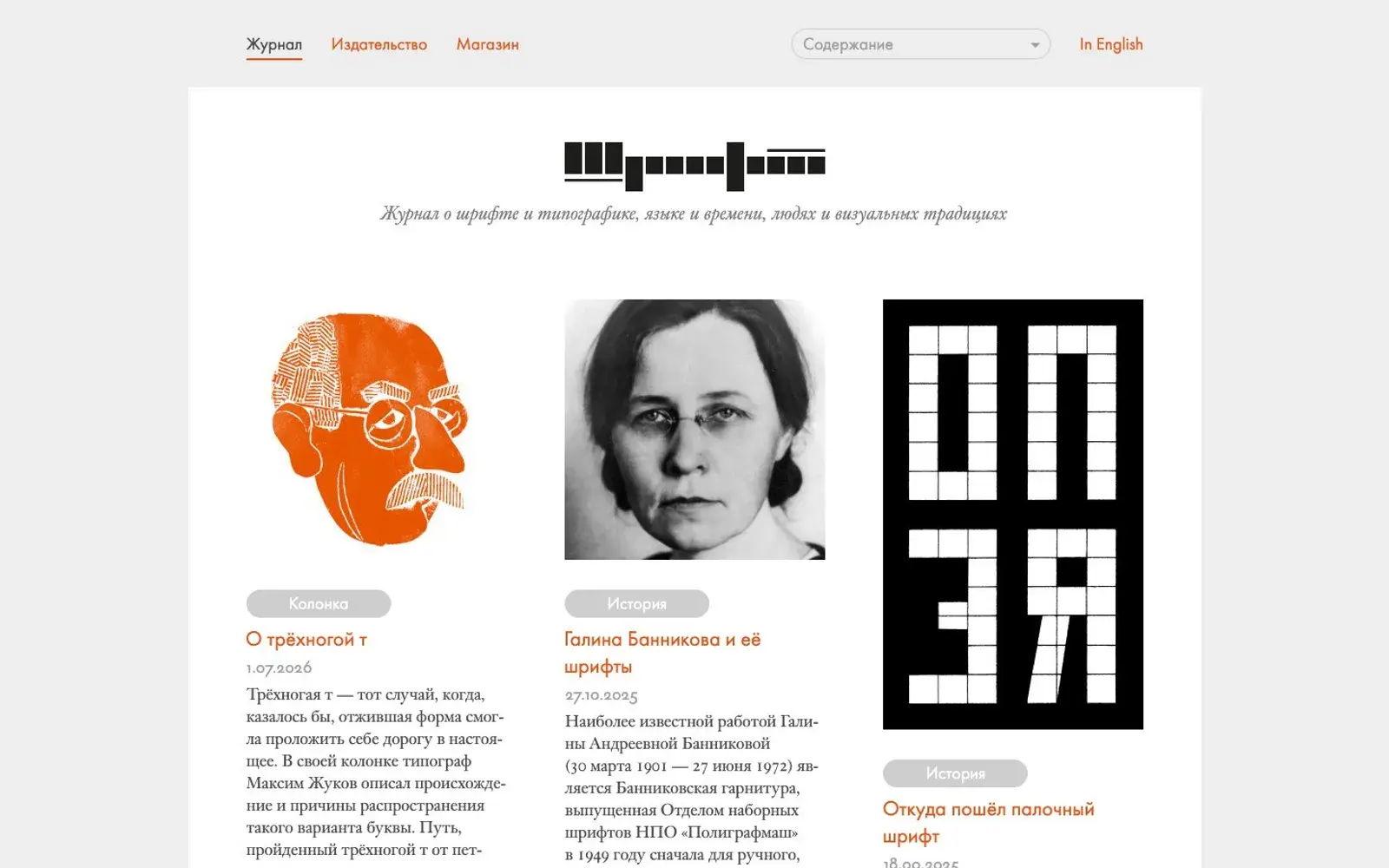
What it is
Shrift ("Type") is an online magazine about type and typography, language and time, people and visual traditions. Articles are grouped into practice, craft, history, interviews, columns and a book shelf. The magazine also runs a small publishing house, and a selection of articles is available in English.
Pieces cover the history of sans-serif lettering in Russia, the typefaces of Soviet designer Galina Bannikova, two techniques of Old Russian calligraphy, the development of Cyrillic letterforms, the making of Yandex Sans, annual roundups of the most notable Cyrillic typefaces, and interviews with Erik Spiekermann, Peter Biľak, Experimental Jetset and many more.
Why we picked it
Serious writing about Cyrillic type is rare in any language, and Shrift does it with depth and style. It reads like a good magazine, not a textbook: there is a detective story about a mysterious inscription in an Italian town, personal memories of type masters, and a sharp column on why Moscow metro signage used to be better. New pieces appear infrequently, the most recent column dates from July 2026, but the ten-year archive is large and does not go stale. Most of it is in Russian; the "In English" section is the place to begin if you do not read Russian, and a browser translator handles the rest.
Where to start
- Open the "In English" section for translated pieces.
- Read the column on the three-legged Cyrillic "т", a neat intro to how the script works.
- Pick one of the yearly "Ten Cyrillic typefaces" roundups to discover fonts.
- Read the interview with Erik Spiekermann.
- Browse the book shelf if you want typography reading recommendations.
Who it's for
Designers, typesetters, graphic design students, editors, book lovers, and anyone working with multilingual branding who needs Cyrillic to look right.
Quick answers
Is it paywalled? Articles on the site are free to read; the project also has a publishing arm and a shop.
Is any of it in English? Yes, there is a dedicated "In English" section with translated articles.
How often is it updated? Not often; think of it as a library rather than a news feed.