Cooper Hewitt: plants in objects
A Cooper Hewitt board on how plants became ornament on porcelain, textiles, wallpaper and jewellery.
What it is
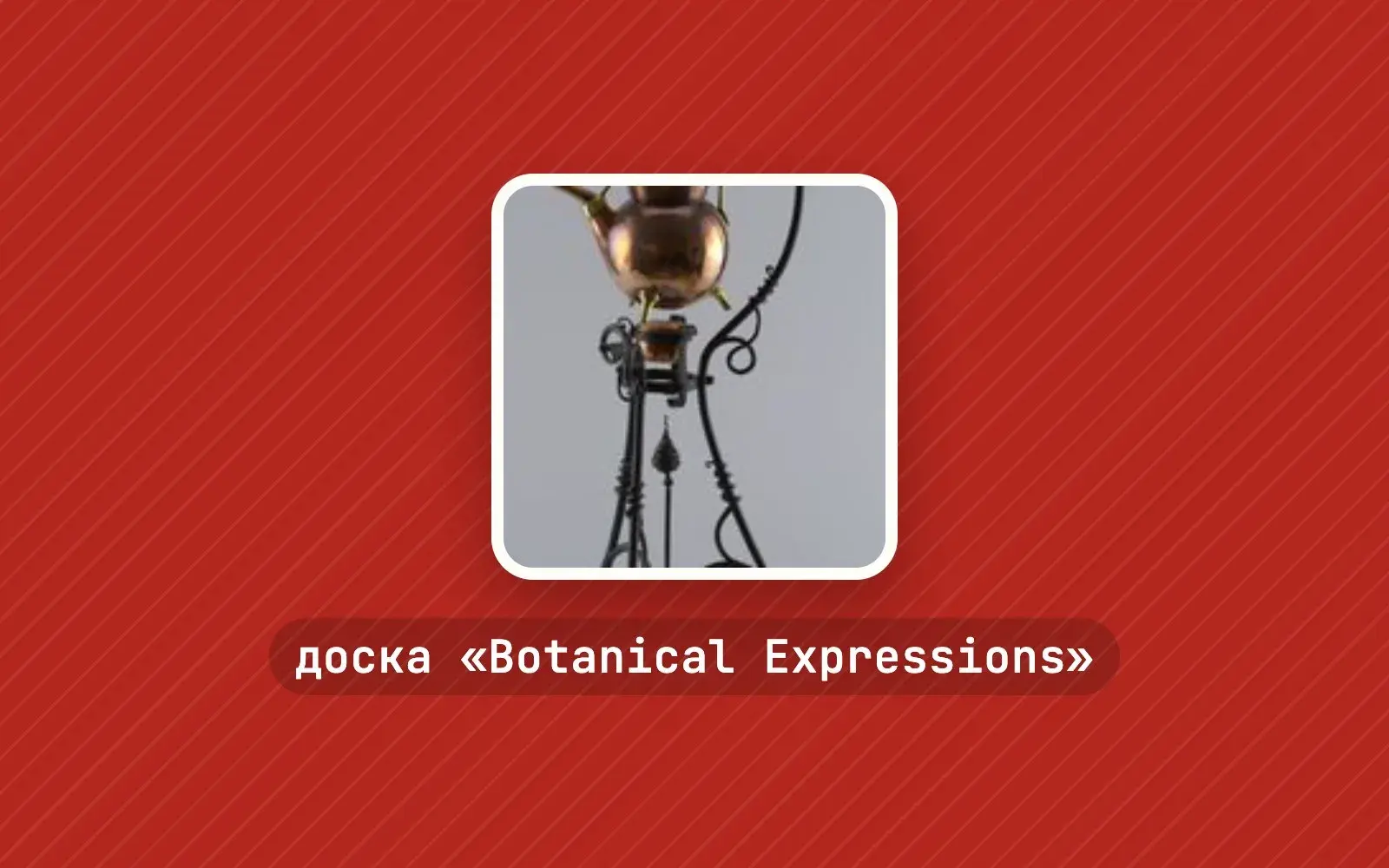
Botanical Expressions is a Pinterest board from Cooper Hewitt, Smithsonian Design Museum in New York. Its 65 pins come from the museum's collection and follow one idea: how flowers and leaves moved from botanical drawings into objects. Porcelain, wallpaper, glass, embroidery, textiles and jewellery, mostly from the late 19th and early 20th centuries — the age of Art Nouveau and the Arts and Crafts movement.
Why we picked it
Botanical illustration is easy to find on Pinterest; seeing how it works on real objects is harder. This board makes it obvious. Chelsea porcelain plates from the 1750s painted after natural history prints. William Morris's Chrysanthemum wallpaper of 1877 and Arcadia by his daughter May Morris. Alphonse Mucha's textile designs with honeysuckle, hollyhocks and anemones, Walter Crane's doilies of bluebells and daisies, and C.F.A. Voysey's tulip wallpaper.
The second thread is glass and ceramics: vases by Louis Comfort Tiffany and the Daum brothers of Nancy, pieces by Christopher Dresser, who believed order and symmetry came from nature, and finely painted Dutch Rozenburg porcelain. There's jewellery too — a Tiffany & Co. orchid brooch and lapel watch. Every pin links to the museum's online collection, with date, maker and a short story about the piece.
Where to start
- Look at the Morris, Voysey and Crane wallpapers side by side to see how differently one flower can be stylised.
- The Rozenburg and Daum vases make a strong moodboard for ceramics and painted decoration.
- Mucha's sketches are useful if you design patterns for textiles or prints.
- For an interior project, pull a colour palette and a set of Art Nouveau motifs straight from the board.
- Then try the museum's other boards, such as Object of the Week and The Wild, for more nature.
Who it's for
Surface and textile designers, ceramicists, interior decorators, illustrators and design history students. And anyone who loves botanical style and wants to see it go further than a framed watercolour.
Quick answers
Do I need a Pinterest account? No, you can view the board without logging in, though Pinterest may prompt you to sign up.
What is Cooper Hewitt? The Smithsonian's design museum, located in New York City and part of the Smithsonian Institution.
Where can I learn more about an object? Pins link to the museum's online collection pages with details about each piece.