iNaturalist
Snap a plant, beetle or mushroom and iNaturalist suggests what it is, then real naturalists confirm it. Your sighting becomes open data for scientists.
What it is
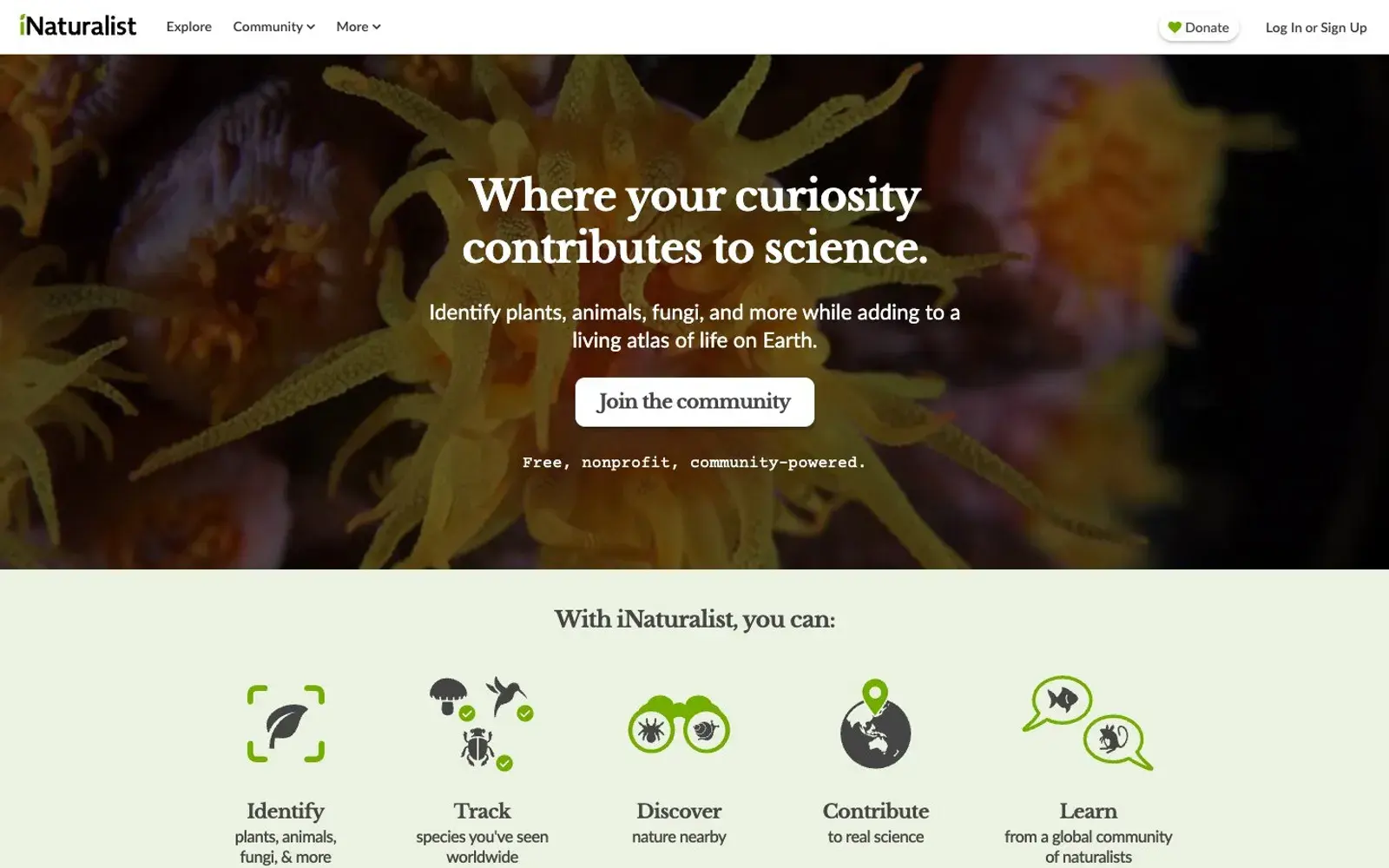
iNaturalist is a free, non-profit platform for recording what you see in nature. Photograph any wild plant, animal, fungus or lichen, upload it with a place and date, and the site instantly suggests an identification. Then people step in: naturalists around the world confirm or refine the species. The site and app are available in many languages.
Why we picked it
It's a rare case where an ordinary walk becomes a contribution to science. According to the project, it holds over 300 million observations covering more than 550,000 species, and thousands of scientific papers cite its data. The homepage tells stories of amateurs rediscovering species thought extinct and even finding ones new to science — like a praying mantis spotted by a woman strolling around her neighbourhood in Australia. Even without discoveries it's a joy: you finally learn the name of that yellow flower by the front door or the moth on the porch light. And the stream of observations is addictive — an otter in Finland next to a desert shrub in Kazakhstan next to a tropical mushroom in Costa Rica.
Where to start
- Open the Explore view and see what's already been recorded near you.
- Photograph the first plant or insect you meet on a walk and upload it.
- Wait for someone in the community to confirm it — that part is oddly satisfying.
- Take the app along on your next hike.
Who it's for
Walkers, hikers and anyone who keeps asking "what bird is that?". Parents who want to turn a stroll into an expedition, biology students, teachers and nature photographers.
Quick answers
Is it free? Yes, it's a free, non-profit project.
Who identifies the species? An automatic suggestion comes first, then community members confirm or correct it.
How big is it? The project reports more than 300 million observations and over 550,000 species documented worldwide.