ESA's Space Image Board
The European Space Agency's own Pinterest board: 700+ images of galaxies, nebulae, planets and the Sun from Hubble, Webb, Gaia and Solar Orbiter, sorted into 14 sections.
What it is
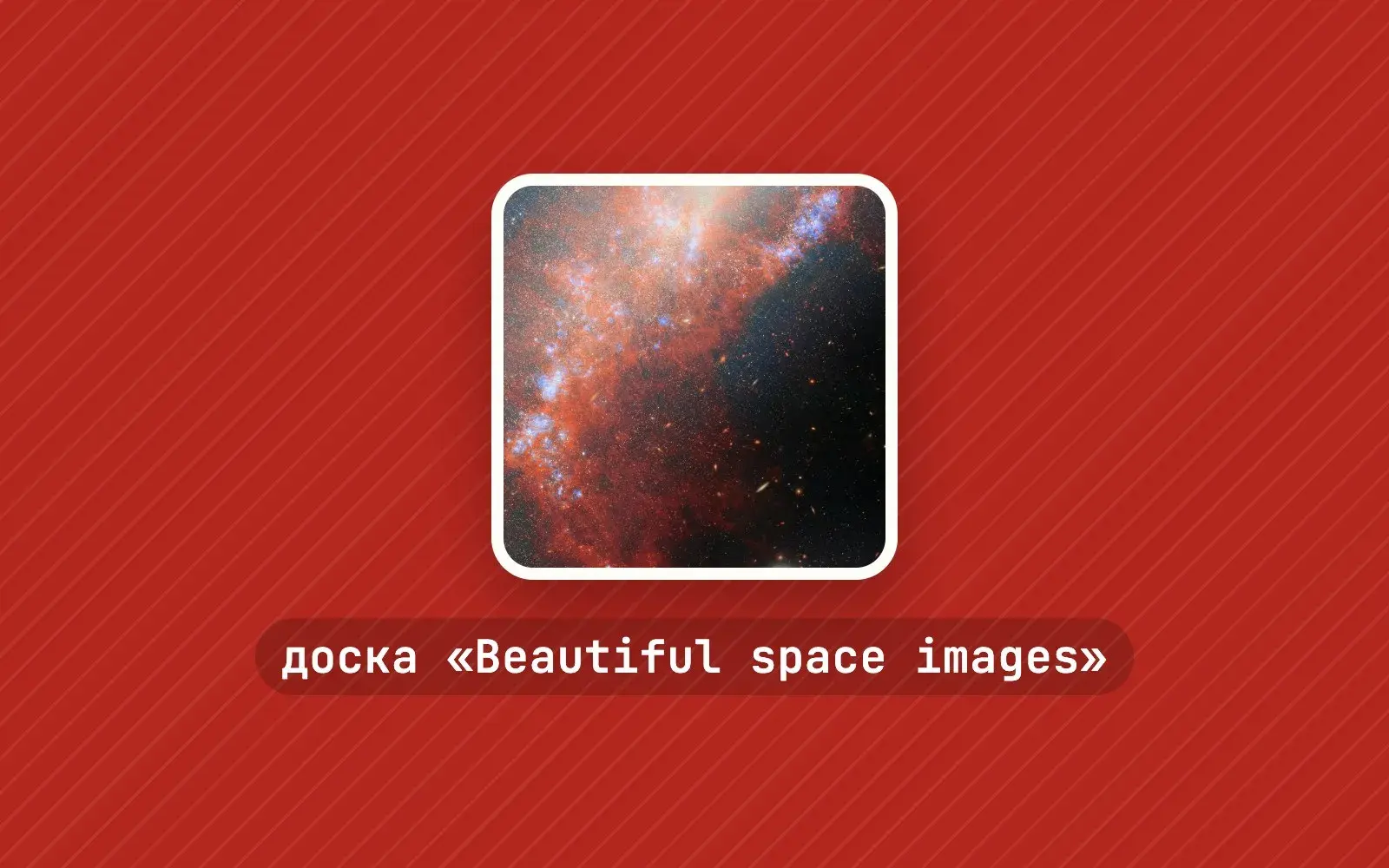
"Beautiful space images" is the European Space Agency's own board on Pinterest. ESA uses it to collect the most striking pictures from its missions and partnerships: the Hubble, James Webb and Euclid telescopes, the Gaia star-mapping satellite, Solar Orbiter, the Mars orbiters and the Rosetta comet mission. The board description puts it simply: travel around the universe with ESA missions and enjoy images of galaxies, stars, planets and moons.
There are more than 700 pins, and they're not dumped into a single feed. The board is split into 14 sections: galaxies, star birth and death, exoplanets, the Sun, our Moon, Mercury, Venus, Mars, Jupiter and Saturn with their moons, Uranus and Neptune, comets and asteroids, impact craters of the Solar System, volcanoes of the Solar System, and sky maps. Each image has a title and a couple of sentences explaining what you're looking at, and the link goes to a full write-up on the agency's site.
Why we picked it
Space pictures are everywhere online, but most of them are uncredited or come with captions that drift further from the truth with every repost. Here the source is the agency that captured the data. Under the image of a debris ring around the star Fomalhaut, you learn that Hubble caught the aftermath of a collision. Under a collage of 31 young star systems, you learn how Gaia is helping explain how planets form. It works less like a wallpaper feed and more like short science news told through pictures.
The board is still being fed. In spring 2026 ESA added new results: Webb's view of the galaxy cluster MACS J1149, the Red Spider Nebula, discoveries from Cheops and Gaia. Older highlights are worth a look too, like Solar Orbiter's first close view of the Sun's south pole, the cold giant planet 14 Herculis c, and a possible planet around Alpha Centauri A.
Pinterest suits this kind of material well: a big image grid, fast browsing, and an easy way to save a favorite shot to your own board.
Where to start
- Open the galaxies section first for the cover-worthy Hubble and Webb shots, such as the spirals NGC 1637 and Messier 106.
- Visit star birth and death: the Butterfly Nebula and the Red Spider Nebula look like different objects depending on the wavelength.
- The Sun section shows the corona and the solar poles up close, which few people have ever seen.
- If you like geology, browse volcanoes and impact craters of the Solar System.
- Click through on a pin you like: it links to ESA's article with the full story.
Who it's for
Anyone who loves astronomy but doesn't want to wade through papers, since the captions are short and plain. Physics and science teachers get a ready-made set of properly sourced illustrations. Designers and illustrators get a mood board of color and form where every image is real data.
Quick answers
Is this really ESA's board? Yes. It sits on the europeanspaceagency profile, and the pins link to the agency's sites, esa.int and esawebb.org.
How much is there? More than 700 pins, organized into 14 topic sections.
Do I need a Pinterest account? You can browse the board without one; an account is only needed to save pins.