Your Chemistry Teacher
Kazakh school chemistry teacher Ulan Usenov explains chemistry through experiments, sport and cooking. Short videos in Russian, with humor.
What it is
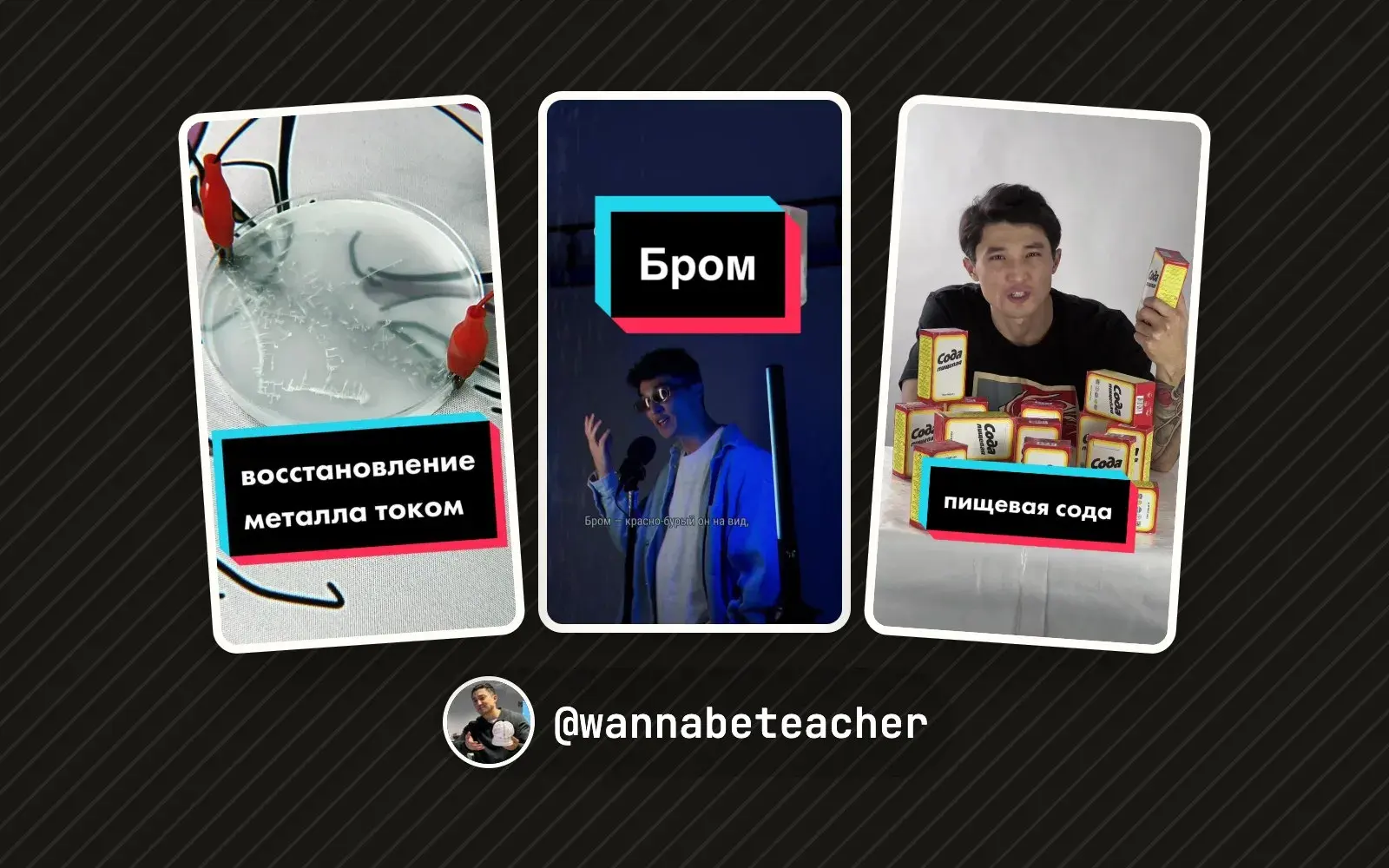
"Your Chemistry Teacher" is the TikTok of Ulan Usenov, a school chemistry teacher from Kazakhstan. Forbes Kazakhstan and Current Time have both profiled him, and local media call him the most popular chemistry teacher on TikTok. When we checked, the account had about 1.6 million followers. The videos are in Russian.
The format is simple: the teacher, some reagents or an everyday object, and a quick explanation of why something happens the way it does. His profile also mentions free online lessons.
Why we picked it
A lot of people had chemistry ruined for them at school by formulas with no context. Here it goes the other way round: real life first, formula second. Recent videos cover what protein powder actually is (spoiler: ordinary protein, like in food), why athletes take glutamine and what kind of amino acid it is, and how chemistry shows up in the kitchen. Topics like these land even with people who left school years ago.
We also like that he doesn't play the showman at all costs. There's humor, but the explanation stays at the center, and each clip sticks to one question and one answer.
Where to start
- Open the profile and scroll the latest videos: there's a run on sports chemistry — proteins, amino acids, supplements.
- Look for the kitchen-themed clips; they explain why meat browns and dough rises.
- Check the pinned videos, which usually hold the most popular experiments.
- If you have a school-age kid, show them a couple of clips before a test.
Who it's for
Russian speakers, first of all: the videos are not in English. Students who see chemistry as a jumble of letters, adults who want to understand the label on a tub of sports nutrition, and teachers looking for ideas on how to explain the subject.
Quick answers
What language are the videos in? Russian.
Who runs it? Ulan Usenov, a school chemistry teacher from Kazakhstan, profiled by Forbes Kazakhstan and Current Time.
Is it only for students? No. Plenty of it is about everyday life — food, sport and household substances.