Chemistry you can see
The TikTok of a Russian chemistry channel: mercury versus gallium, white phosphorus, colored titanium and gold hammered thin. Short, visual and a bit silly.
What it is
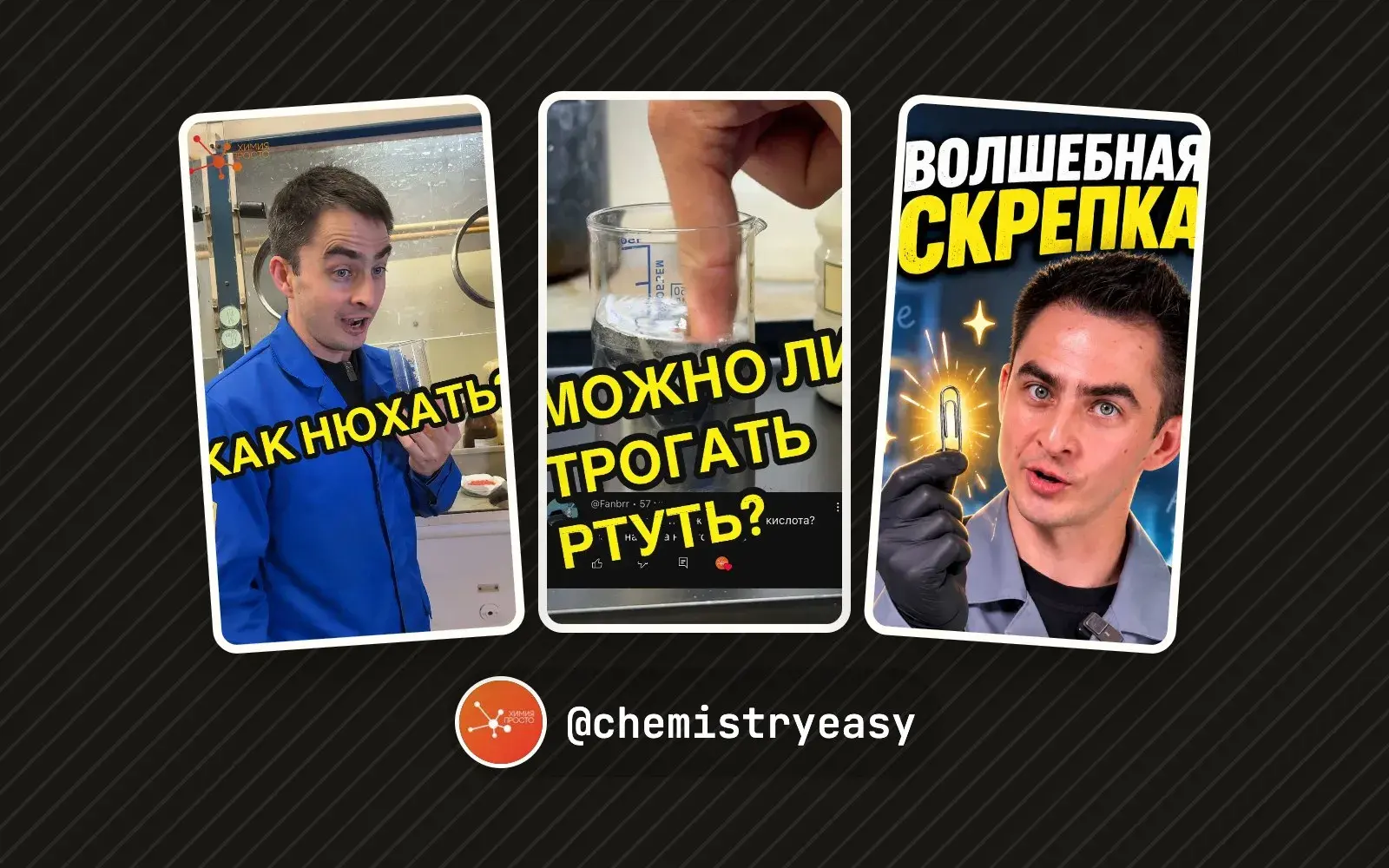
The TikTok account of "Химия — Просто" ("Chemistry — Easy"), one of the best-known chemistry channels in the Russian-speaking internet. On YouTube the project posts long experiment videos; here it cuts things down to a minute: a substance, an effect, an explanation. About 560,000 people follow it, and new clips arrive several times a week. Everything is in Russian, but the demos themselves are easy to follow even if you only catch half the words.
Why we picked it
Plenty of people remember school chemistry as formulas on a blackboard. This account turns it back into something you can watch happen. September's clips cover why people confuse mercury and gallium, what white phosphorus actually looks like, how titanium gets its color and how gold is flattened into thin sheets. There's a straight answer to the classic "is it okay to touch mercury?" and a joke about "3D printing with mercury." The humor never buries the point: after a minute you walk away with one clear fact.
We also liked a video where the author goes back to Ural Federal University, where his path into science began, and returns now as a lecturer and the face of a science channel. It's a reminder that there's a lab person behind the account, not someone reposting other people's clips. The dangerous stuff is handled in lab conditions, and it's meant to be watched, not copied.
Where to start
- "Stop confusing mercury and gallium," a good intro to the format.
- "Ever seen white phosphorus?", a substance few people see in real life.
- "How is gold flattened?", a very visual take on malleability.
- "How do you color titanium?", color without paint.
- "Can you touch mercury?", a short answer to a common question.
Who it's for
Teenagers who think chemistry is boring, adults who forgot the periodic table but still enjoy watching things fizz, melt and change color, and teachers looking for a hook to open a lesson.
Quick answers
What language are the videos in? Russian, with short captions and hashtags.
Is it just entertainment? No. Each clip explains why the substance behaves the way it does; the jokes are the wrapping.
Can I repeat the experiments at home? Mostly no. Mercury, white phosphorus and similar chemicals need a lab and protective gear, so enjoy them from the couch.