Radzima: Belarus Landmarks
A photo catalogue of landmarks in Belarus and neighboring lands: churches, synagogues, manors and palaces, each with photo galleries and coordinates.
What it is
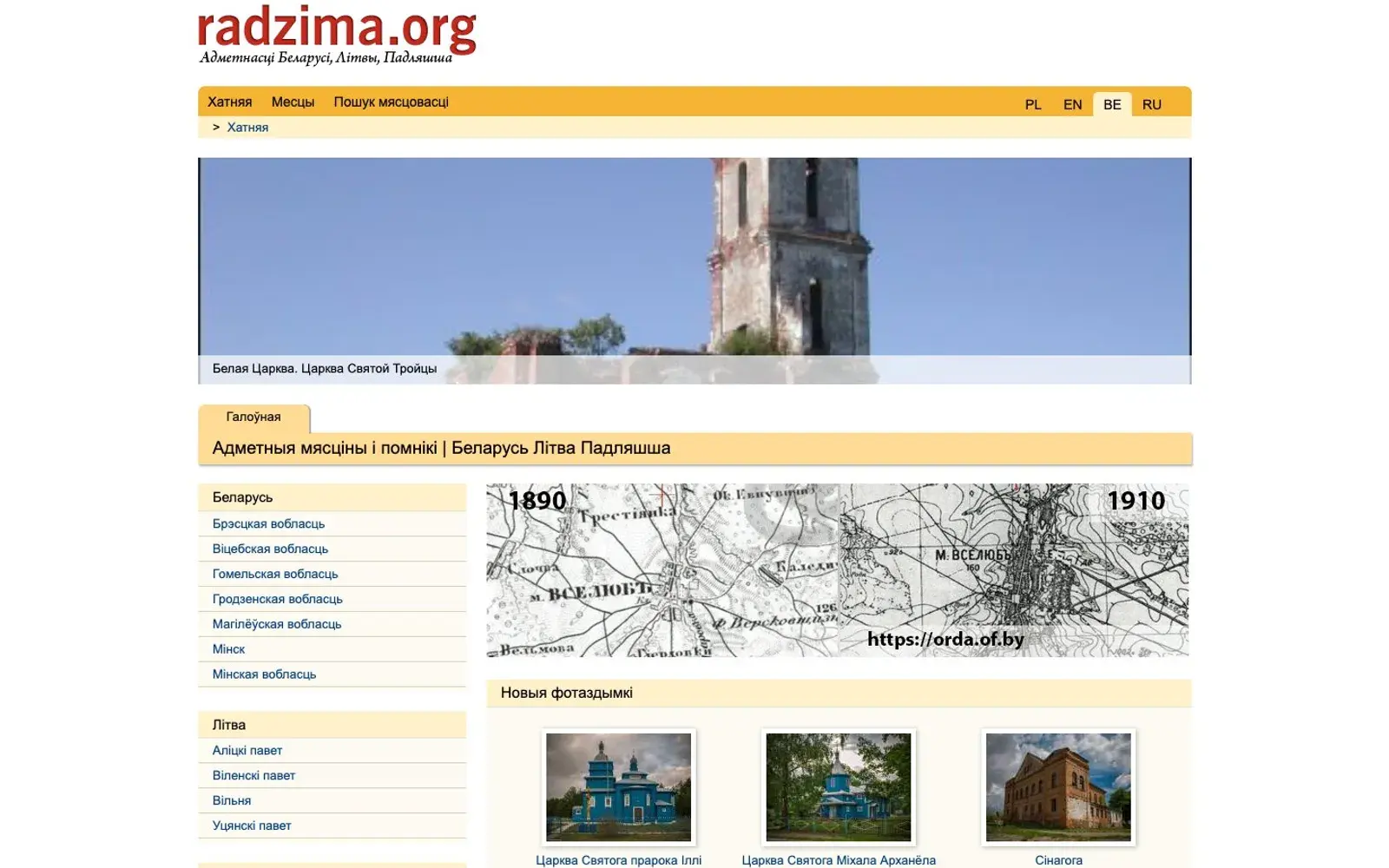
Radzima.org is a large photo catalogue of landmarks in Belarus and the lands around it: Vilnius and parts of Lithuania, Podlaskie in Poland, and the Smolensk, Pskov and Bryansk regions of Russia. It's organized by region, district and individual village, and every site has photo galleries from different contributors plus coordinates. The site runs in Belarusian, Russian, Polish and English.
Why we picked it
It lets you travel across Belarus from your chair and see what tourist brochures skip. Beyond well-known Mir, there are hundreds of rural wooden churches, baroque Catholic churches, synagogues in former shtetls, abandoned manor houses and old cemeteries. The New pictures feed on the homepage shows the catalogue is still growing, with volunteers visiting villages and adding photos.
There's also a sobering section on lost heritage: buildings that are gone or falling apart. Over time, these photos become a record of what once stood there.
Where to start
- Switch to English using the language links at the top.
- Scroll through the New pictures feed on the homepage.
- Search for a town or village your family came from.
- Look through the lost heritage section.
- Open a site with a big gallery: shots from different years and photographers show how a building has changed.
Who it's for
Architecture fans, lovers of old manor houses, travelers in Belarus and Lithuania, people tracing family roots, and photographers into local history.
Quick answers
Is it only about Belarus? Mostly, but it also covers Vilnius and parts of Lithuania, Podlaskie in Poland and neighboring Russian regions.
Is there an English version? Yes, although some place descriptions are fuller in Belarusian and Russian.
Where do the photos come from? Many different contributors; each gallery is credited to its photographer.